


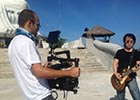
For the past years, we had serves hundreds of filmmakers for shooting in Thailand, sharing out our skills and best equipment at great quality, we guide and provide support to our customers to ensure they can achieve their goals regardless of experience level.
Working with us in Thailand, even with a relatively small budget, you are guaranteed to have amazing locations, good communication and effective team performance.
About filming in Samui please contact us for referrals, questions, cost estimates and references. We are always ready to answer your questions about film production services in Thailand.

|
Whether it is a feature film, episodic production, commercial, music video, fashion shoot or a small documentary, filming on an island is always a little different from filming in Bangkok. Koh Samui is Thailand’s second-largest island, located in the Gulf of Thailand in Surat Thani Province. For many international producers, Samui is first known as a holiday destination: beaches, coconut palms, resorts, waterfalls and tropical mountains. But once you bring a professional film production here, the island becomes a completely different place. We provide film production services in Koh Samui for international and local productions, from permits and locations to crew, equipment, transport and all the practical details that still need to work when the cameras start rolling. Samui has a good range of local production resources, but it is not Bangkok. That difference is important when planning a serious shoot. For a small production, you may be able to work with a local videographer, a compact camera package and a small lighting kit. For a larger production, you may need to bring key crew, camera equipment, lighting, grip, art department or unit equipment from the mainland. We work with equipment owners, rental companies and production crews across Thailand, so we can build the production around the actual requirements of the project rather than around whatever happens to be sitting on Samui that week. Our experience covers feature films, TV and reality shows, documentaries, commercials, music videos, fashion and lifestyle productions, automotive shoots and smaller content projects. The scale can be anything from a small local crew with a Sony FX3 to a full production arriving with an ARRI camera package, a lighting truck and enough equipment to make the ferry crew nervous. We have also worked on very different productions in Samui. Different cameras, different crews, different budgets and completely different production problems. That is exactly what local production support is for. For smaller shoots, we can arrange local Samui videographers and compact equipment packages. For larger productions, we can bring experienced crew and equipment from Bangkok and coordinate the whole movement to the island. This can include camera department, 1st AC and 2nd AC, DIT, lighting crew, production assistants, runners, drivers, production coordinators, unit, catering, art department and other specialists depending on the project. We also work with international crews and cinematographers who need local production support without giving up control of how the shoot is actually made. There is another reason why local knowledge matters in Samui: the island does not always behave like the picture on the location scout. Take waterfalls, for example. Weather, Seasons, and Location Realities on Koh SamuiSamui has several well-known waterfalls and they can look spectacular on location photographs. But a waterfall is not a tap. During the drier part of the year, some waterfalls can have considerably less water than you might expect from photographs taken during or shortly after the rainy season. If your script specifically says that the hero walks underneath a powerful waterfall, or the location is an important part of the visual concept, this is something you want to know before booking flights, crew and a full camera package. Na Muang, Hin Lad and other waterfall locations can look very different depending on recent rainfall. Sometimes the location is exactly what you imagined. Sometimes it is beautiful but the water flow is much smaller. And sometimes the weather has changed the location completely. This is one of those details that may not be obvious to a producer planning the shoot from Europe, the US, Australia or anywhere else outside Thailand. A location photograph from six months ago does not necessarily tell you what you will find on the day. The same applies to beaches. A beach can look empty in a location photo and completely different when several thousand tourists are arriving for the day. Tide levels, time of day, weather, hotel occupancy, local events and access can all affect how practical a beach is for filming. If the scene requires a quiet beach, clean background, controlled extras or a camera movement along the shoreline, we need to look at more than just whether the beach is beautiful. The time of day also matters. Sunrise and sunset are not simply items to tick off in the call sheet. On an island, the position of the sun, surrounding hills, palms, buildings and coastline can change the actual light on your location. A location that looks perfect at 5 PM in a reference photograph may have completely different light when you arrive with the camera. For cinematographers, this is obvious. For a producer organising the shoot remotely, it is not always possible to know from Google Maps or a tourist photograph what the location will actually look like at the required shooting time. Weather is another part of the equation. Samui has its own weather patterns and they are not always identical to what you might expect from Bangkok or Phuket. There are drier periods, wetter periods and periods when the weather can change quickly. The monsoon season can bring heavy rain, strong winds and changes in sea conditions, but tropical weather does not always follow a perfect calendar. This matters when your production depends on boats, beaches, drones, cranes, lighting equipment, long lenses, Steadicam or Ronin work, exterior dialogue or a large company move. A production can survive rain. What is harder is discovering at the last minute that the weather has changed the entire logistics plan. This is why we prefer to discuss the production before simply sending a rate card. We want to know what you are actually trying to shoot, what the visual references are, which locations are essential, how many people are travelling, what camera and lighting package you need, whether you need a drone, whether there are water activities, whether the production needs boats or special vehicles, and how much of the equipment needs to come from Bangkok. Sometimes the answer is that you need a large production package. Sometimes the answer is that you don't. And sometimes the best solution is to change the location, change the shooting date or use local equipment instead of transporting half of Bangkok to the island. We can also advise when another Thai island may make more sense for a particular project. Samui is one of our favourite places to work, but it is not automatically the right answer for every script. Depending on the visual reference and production requirements, Koh Phangan, Koh Larn, Koh Chang, Koh Lipe or Phuket may offer a better combination of landscape, access, accommodation, crew, equipment and logistics. That is part of our job as a production service company. We are not here simply to confirm the location the client has already chosen. If we know there is a practical problem with the plan, we would rather discuss it before the production arrives. The same applies to equipment. The Samui Crossing: How to Manage Film Equipment and TransportSamui has local rental resources, including compact camera systems, lenses, gimbals, monitors, wireless video, batteries, audio equipment and smaller lighting packages. For larger productions, we can bring equipment from Bangkok and coordinate its transport to the island. Camera equipment normally travels separately from general production equipment. Lighting and grip can travel by truck, while a dedicated camera van can be arranged with the rear seating removed to carry the camera package safely while still transporting the camera department. If you need a Ronin 2, Steadicam, large lighting package, grip equipment, generator, crane, dolly or other specialist equipment, we can organise the additional transport and crew rather than expecting the local rental market to magically produce everything overnight. And yes, somebody still has to get the truck onto the ferry. The journey from Bangkok to Samui is part of the production planning as well. Depending on the equipment and crew, we can arrange road transport to Don Sak and the ferry connection to the island. Crew can also travel separately, including by scheduled bus services where appropriate. Travel days, ferry schedules, loading time and equipment movement all affect the actual cost of a Samui production. These are not glamorous production details, but they are exactly the details that can make the difference between a smooth shooting day and a very expensive morning spent waiting for something to arrive. For international productions, we can also handle the Thailand Film Office coordination, filming permits, temporary work permits, location permissions and other production paperwork required for the shoot. Getting a filming permit for Koh Samui is not, in itself, some kind of expedition into the unknown. For ordinary commercial productions, documentaries, music videos, fashion shoots and TV productions, the process can be quite straightforward if the application is prepared properly. What matters is not only where you want to shoot, but what you are going to shoot there. Thai authorities will look at the nature and content of the production, and more sensitive subjects, locations or activities can require a more detailed review. National Parks, for example, are a different story. A simple tripod near a waterfall is one thing. Twenty trucks, a temporary set, a crane in the jungle and something exploding in the waterfall is another. The authorities may need details about the equipment, crew, vehicles and potential environmental impact before approving the shoot. The same applies to productions involving religion, the monarchy or other sensitive subjects. These cases may require additional consideration by the Thailand Film Office and other relevant authorities, and this is not specific to Samui — the same principle applies to filming anywhere in Thailand. For a production coordinator, this is why understanding the actual content of the shoot is important before submitting the application. A film permit is not simply a form with a location and shooting dates attached to it. For a normal Samui production, allow around 2–4 weeks for the permit process, depending on the type of production, locations, subject matter and any additional permissions required. The earlier we receive the script, treatment, shooting plan, locations and basic production details, the easier it is to identify potential problems before the crew is already on the island. If you are still at the budgeting stage, you can also use our Thailand Film Permit Calculator to get a quick estimate of Film Permit and Temporary Work Permit costs based on the number of foreign crew members, shooting days and other basic details. It is not a final production budget — locations, special permissions, drones, National Parks, travel and other requirements can change the final cost. But it is useful for the first producer conversation, before the spreadsheet becomes 14 tabs and everyone starts asking who is paying for the ferry. We know Samui because we work here, not because we have collected a few nice photographs of the island. We know where the production can become complicated, which locations need more preparation, when weather can become a problem, how to move equipment from Bangkok, where local resources are available and when it makes more sense to bring everything with you. And if you are not sure whether Samui is the right place for your production in the first place, talk to us before making the decision. The first consultation is free. Send us the script, treatment, visual references, approximate dates or simply tell us what you are trying to shoot. We will look at the project from the production side and tell you what we think is practical. We love Samui. We know Samui. And we are happy to help you figure out how to shoot here without discovering the important details after the crew has already landed. |
FILM
SERVICE
THAILAND